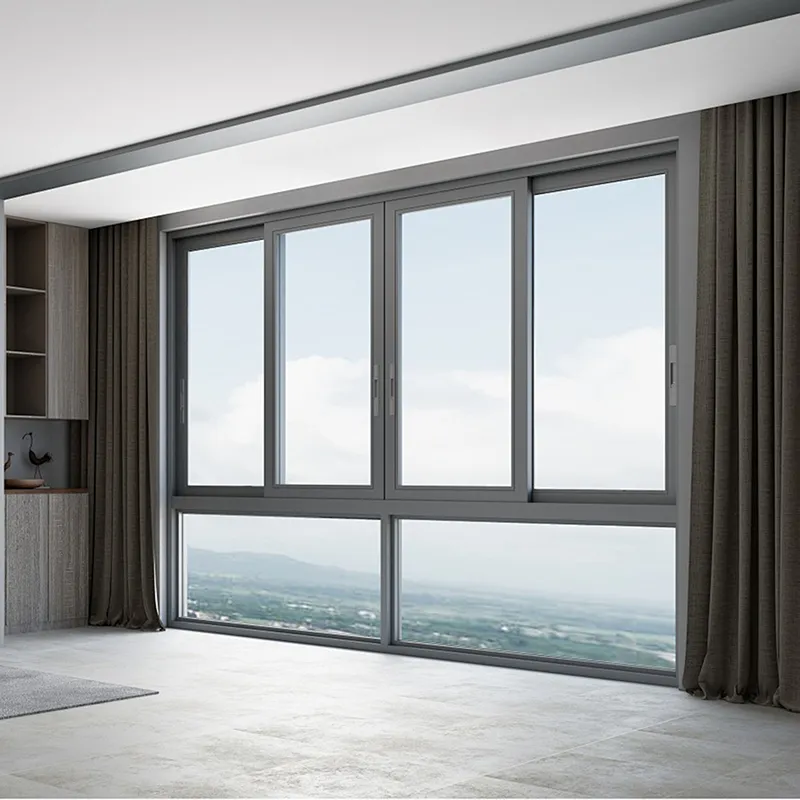
Quick answer: A window’s Uw value describes heat transfer through the complete window assembly, including the frame, glazing and edge effects. A lower Uw usually indicates lower modeled heat loss, but the number is meaningful only when the reference size, glass build-up, frame, spacer and calculation or test basis are comparable.
Uw is a useful starting point for a European window schedule, not a standalone promise about an installed building. The final result also depends on orientation, shading, ventilation, installation quality and the way the building is used.
Uw, Ug and Uf answer different questions
Ug describes the centre-of-glass performance. Uf describes the frame. Uw combines the complete window, so it is the value to compare when the schedule is about a whole opening. A large glass area can make the whole-window result different from a small reference window, even when the same glazing is specified.
The combined result is influenced by the glass area, frame area, spacer or edge detail and the thermal calculation method. That is why a glass-only Ug value should not be copied into a schedule as if it were the Uw value. If a supplier gives more than one number, ask which one is the whole-window value and which one belongs to a component.
What to check beside the number
- Units: confirm the value is stated in W/m²K and that the decimal separator has not changed during translation.
- Reference size: record the test or calculation dimensions and opening type. A result for a small fixed light is not automatically the result for a large sliding door.
- Configuration: note frame depth, thermal breaks, glass make-up, spacer, gas fill and opening hardware where supplied.
- Basis: distinguish a declared value, a calculated value and a laboratory test result. They are not interchangeable evidence.
- Installation: keep the window value separate from junction, reveal and air-sealing details that affect the installed opening.
An illustrative comparison
Imagine two options listed as 1.0 and 1.3 W/m²K under the same reference conditions. The first indicates lower modeled heat flow through that reference window. It does not prove that the first option will deliver the same result in every size, glass combination or installation. If the reference conditions differ, the numbers should be treated as two separate data points rather than a simple ranking.
For a real project, place the value beside the opening ID, dimensions, opening type and glass specification. This makes it possible for the designer, supplier and installer to discuss the same assembly instead of comparing isolated figures.
Questions to send with a quotation request
- Is the quoted value Uw for the complete opening, and what reference size was used?
- Which Ug, Uf, spacer and glass build-up sit behind the result?
- Is the figure calculated or tested, and which calculation or test document supports it?
- Does the result apply to the requested opening type, especially if the project includes sliding, folding or unusually large units?
- What installation interface and air-sealing assumptions are included?
Use Uw with the wider project brief
A good window decision balances thermal performance with solar gain, daylight, acoustic goals, ventilation, safety, weather exposure, finish, hardware and maintenance. The Forge Windows product range can be reviewed alongside the project solution pages so that the opening type and climate context stay visible. For complex schedules, the technical service workflow is the right place to coordinate drawings, performance targets and installation questions.
For refurbishment and new-build work alike, include the door in the room’s access, fire and safety review. Confirm the opening direction, escape strategy, threshold transition and cleaning access with the architect. These checks sit alongside, rather than replace, the supplier’s performance documentation.
Evidence and scope
This guide explains how to read a whole-window thermal value; it does not certify a particular product or project. Final performance must be confirmed for the specified configuration, reference size and destination requirements using the supplier’s current technical documents. For European regulatory context, see the Energy Performance of Buildings Directive and the Construction Products Regulation.